There are two kinds of hosts: the ones who run out of food and spend the rest of the night apologizing, and the ones who make too much and spend the next week eating the same thing for lunch. Neither is a great outcome. The good news is that professional caterers figured out the math a long time ago — and once you have the actual numbers, "how much should I make?" stops being a stressful guess and becomes a five-minute calculation.
Whether you're planning a dinner party for 12, a Thanksgiving spread, or a week of meal prep, here are the real quantities that work.
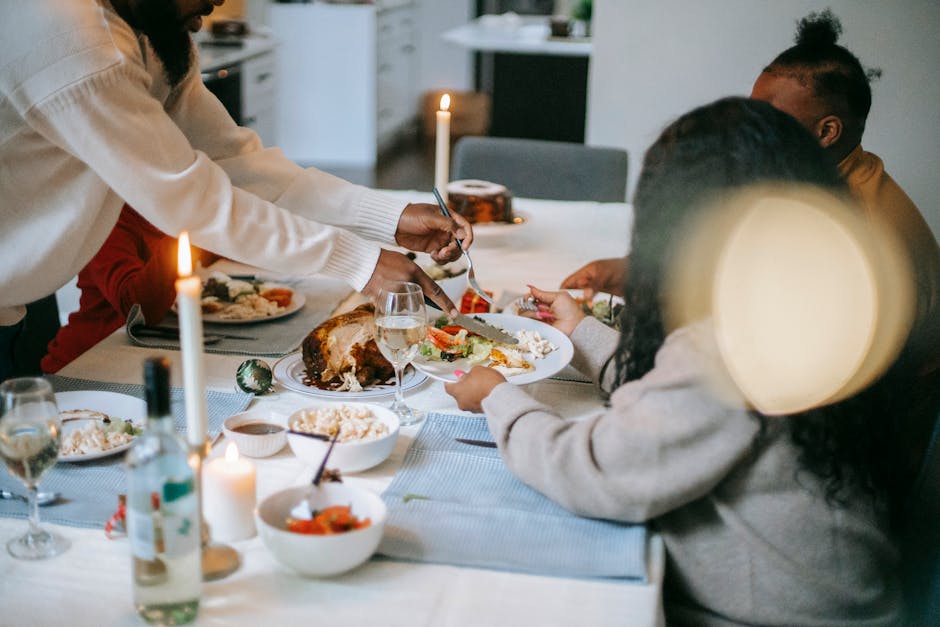
The Foundation: Standard Protein Portions
Protein is the anchor of most meals and the most expensive ingredient in most recipes, making it the most important portion to get right. Standard catering industry guidelines, which form the basis of recommendations from the Serious Eats food team among others, are:
| Protein Type | Dinner Portion (raw) | Lunch Portion (raw) | Party / Buffet |
|---|---|---|---|
| Beef (steak, roast) | 6–8 oz | 5–6 oz | 4–5 oz |
| Poultry (bone-in) | 8–10 oz | 6–8 oz | 5–6 oz |
| Poultry (boneless) | 6–8 oz | 5–6 oz | 4–5 oz |
| Pork | 6–8 oz | 5–6 oz | 4–5 oz |
| Fish (fillet) | 5–6 oz | 4–5 oz | 3–4 oz |
| Shrimp (large, peeled) | 5–6 oz | 4–5 oz | 3–4 oz |
| Ground meat (burgers, meatballs) | 5–6 oz | 4–5 oz | 3–4 oz |
These are raw weights — cooked weight will be 20–30% less due to moisture loss during cooking. When buying groceries, always calculate based on raw weight and account for this shrinkage.
Sides and Starches: The Underestimated Category
Most hosts get protein right and underestimate sides, leading to plates that feel unbalanced. Standard side portions:
- Pasta (dry): 2–3 oz per person as a side; 4–5 oz as a main
- Rice (dry): 2–2.5 oz per person as a side; 3 oz as a main
- Potatoes (raw): 5–6 oz per person
- Salad greens: 1.5–2 oz per person for a side salad
- Cooked vegetables: 3–4 oz per person
- Bread/rolls: 1.5–2 oz (1–2 rolls)
- Soup: 10–12 oz as a starter; 14–16 oz as a main
The team at Pinch of Yum — one of the most popular recipe blogs online with 1.8 million Instagram followers — emphasizes in their meal prep guides that the standard approach of treating carbs as an afterthought consistently leads to undershooting at gatherings. Starchy sides act as appetite satisfiers; generous portions reduce how much expensive protein guests consume.
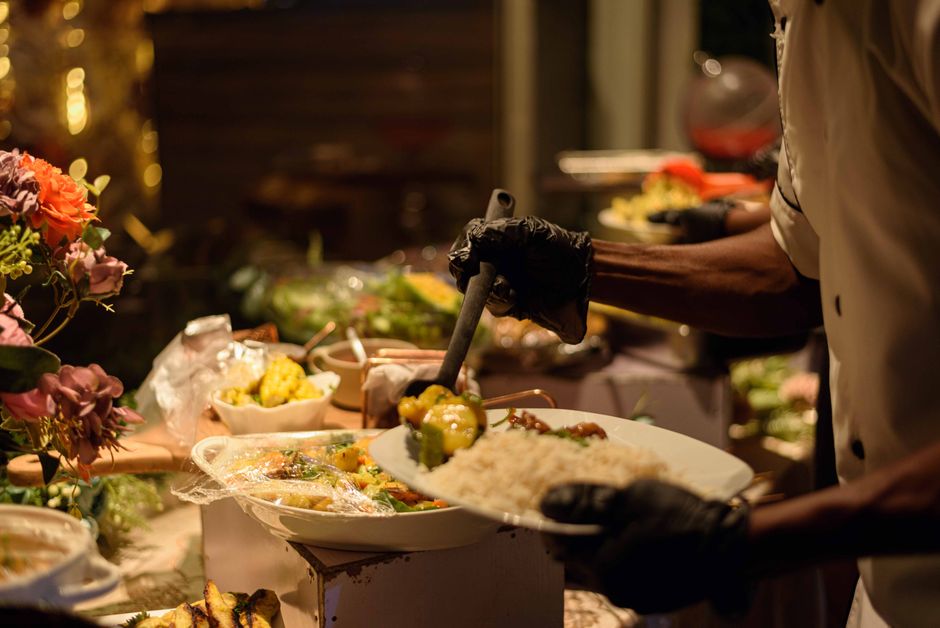
The Menu Adjustment Principle
A critical insight that separates experienced hosts from novice ones: individual portion sizes decrease as the number of dishes increases.
When you serve one dish, people eat that dish fully. When you serve five, they sample each one and eat less of each. A buffet with 10 items needs smaller portions per dish than a plated dinner with 3 courses.
As a rule of thumb used by professional caterers:
- 1–2 dishes: serve full portions
- 3–4 dishes: reduce each by about 10%
- 5+ dishes (buffet style): reduce each by 20–25%
This principle is discussed extensively in professional cooking education programs at institutions like the Auguste Escoffier School of Culinary Arts, which covers scaling and portioning for food service as a core competency in its culinary programs.
The 10% Buffer Rule
Always prepare 10–15% more than you calculate for sit-down dinners. For buffets where guests serve themselves, prepare 20–25% more. This accounts for:
- Guests who eat more than average
- Cooking loss variance (some batches shrink more than others)
- Spillage and plating waste
- The social anxiety of running out, which significantly affects guest experience
The Kitchn, a daily food magazine with over 2 million followers and a Domain Authority of 87, consistently recommends the buffer approach in their entertaining guides: "It's better to have leftovers than to run short. Leftover food can become tomorrow's lunch; an empty serving bowl cannot."
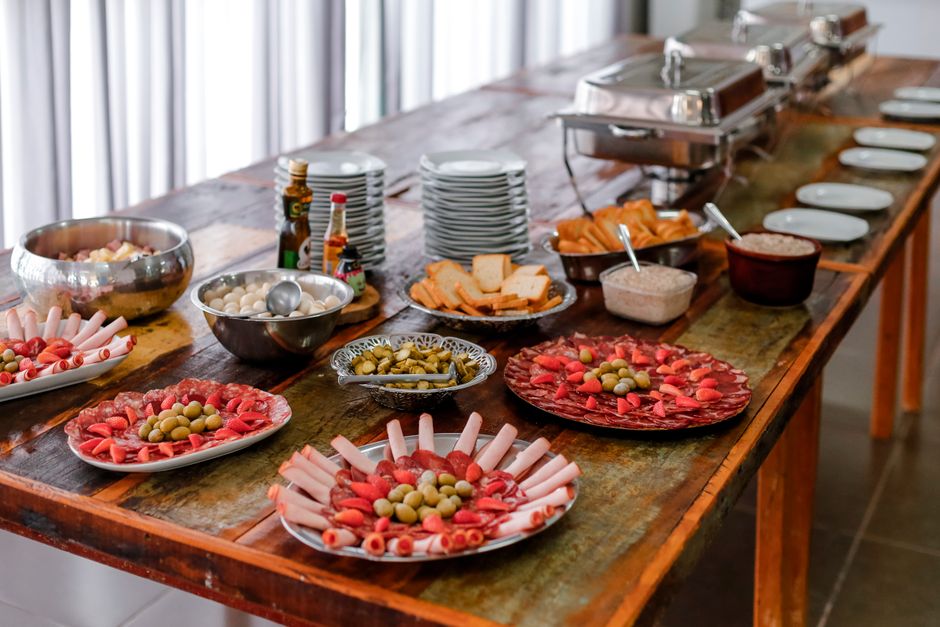
Holiday Meals: Special Considerations
Holiday meals skew larger than everyday dinner parties because of their special-occasion nature, the presence of more dishes, and the social expectation of abundance. Specific holiday guidelines:
Thanksgiving Turkey
The general rule from catering professionals: 1–1.5 lbs of whole bird per person. This accounts for bones, which make up roughly 35–45% of a turkey's weight. A 15 lb turkey feeds 10–12 people comfortably with moderate leftovers.
Holiday Roasts
For bone-in standing rib roast: 1 bone per 2 people (each bone represents about 2 lbs of meat). For boneless roast: 6–8 oz cooked weight per person, which means buying 8–12 oz raw per person accounting for shrinkage.
Ham
Bone-in ham: ½ lb per person. Boneless ham: ⅓ lb per person. Ham has lower shrinkage than other proteins since it's typically pre-cooked and just being reheated.
Meal Prep Portions: Thinking in Containers
Meal prepping for the week requires a slightly different mindset than event cooking. Instead of planning for guests, you're planning for consistency — every container should provide the same satisfying meal.
Standard meal prep container targets per meal:
- Protein: 4–6 oz cooked
- Grains or starch: ½–¾ cup cooked
- Vegetables: 1–1.5 cups cooked
- Total: approximately 500–700 calories depending on ingredients
Budget Bytes publishes detailed meal prep guides that include cost-per-container calculations alongside portion guidance, making it one of the most practical resources for anyone trying to build an efficient weekly cooking routine.
Calculate Exact Portions for Your Event
Enter your dishes, number of guests, meal type, and appetite level — get exact quantities to buy and prepare, with a buffer recommendation included.
Open Portion Size Calculator →How much meat per person for a dinner party?
For a sit-down dinner where meat is the main course, plan for 6–8 oz of raw boneless meat or 8–10 oz bone-in per person. For a buffet with multiple proteins, reduce to 4–5 oz per protein. Always buy 10–15% more than your calculated total to account for cooking loss and variation in appetite.
How much pasta per person?
As a side dish, 2–3 oz of dry pasta per person. As a main course, 4–5 oz dry per person. Dry pasta roughly doubles in weight when cooked, so 4 oz dry becomes about 8 oz cooked. For a crowd, the proportion calculation gets more efficient — 10 people as a main needs about 2.5 lbs dry pasta.
How much food do I need for a party of 20?
For a buffet-style party of 20 with 4–5 dishes: plan for 3–4 oz of each protein per person (about 4–5 lbs per protein dish), ½ cup per person of each starch side (about 10 cups total), and 1 cup per person of salad or vegetable sides. Add 20–25% buffer to all quantities. Total protein budget: 8–10 lbs raw across all protein dishes.