It's 7pm. You've already committed to making this cake. The recipe calls for a 9-inch round pan. You have: an 8-inch round, a 9×13, and a bundt pan that's been in the cabinet since 2019. Is it a dealbreaker? Absolutely not — but it does require about two minutes of math and a few adjustments that most recipes refuse to mention, apparently assuming you own every pan that exists.
This guide covers the formulas, the common pan volume chart, when to adjust temperature and time, and the key decisions that separate a successful pan swap from a disappointing flat slab of cake.
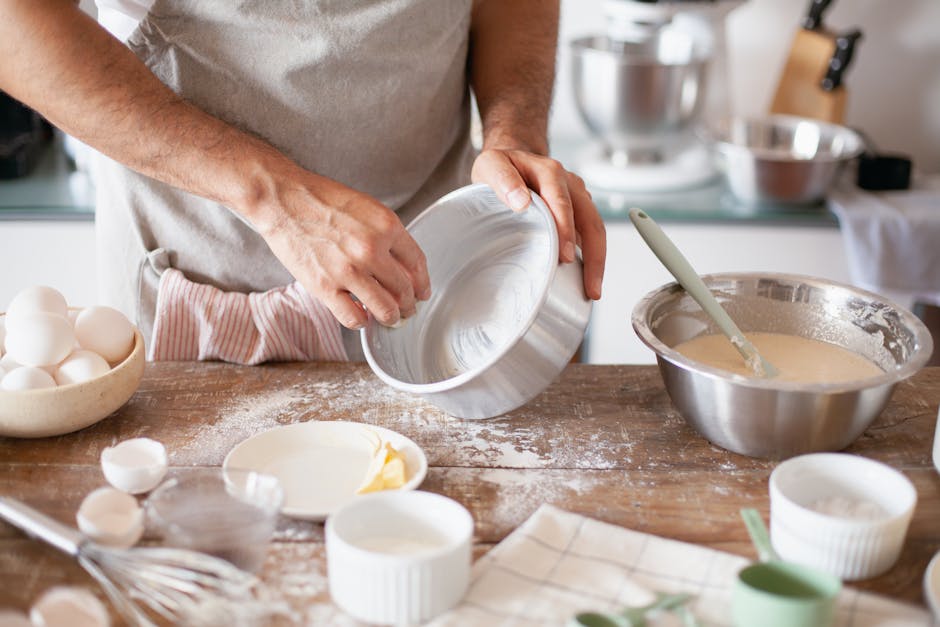
Why Pan Size Matters in Baking
In baking, pan size affects three critical things: batter depth, surface area for browning, and baking time. Change any one of these and the result changes — sometimes dramatically.
As baker and New York Times bestselling author Sally McKenney of Sally's Baking Addiction — whose detailed pan size guides have been referenced by millions of home bakers — explains: "A mere 1-inch difference in diameter between an 8-inch and 9-inch round pan makes the 9-inch pan 25% larger in surface area." That size difference affects every aspect of how the batter bakes.
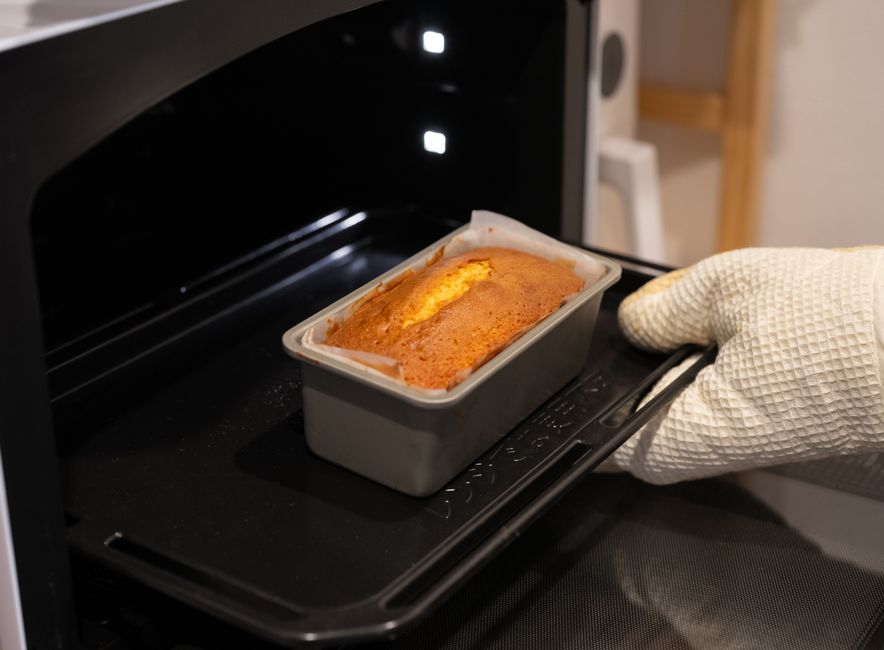
Common Pan Volumes: The Reference Chart
| Pan Size | Shape | Depth | Volume (cubic in) | Approximate Cups |
|---|---|---|---|---|
| 6" Round | Round | 2" | 57 | ~4 cups |
| 8" Round | Round | 2" | 112 | ~7 cups |
| 9" Round | Round | 2" | 127 | ~9 cups |
| 10" Round | Round | 2" | 157 | ~11 cups |
| 8" Square | Square | 2" | 128 | ~9 cups |
| 9" Square | Square | 2" | 162 | ~11 cups |
| 9×13" Rectangle | Rectangle | 2" | 234 | ~14 cups |
| 9×5" Loaf | Loaf | 3" | 135 | ~8 cups |
| 12-cup Bundt | Bundt | — | 288 | ~12 cups |
This volume data is consistent with the reference charts used by Taste of Home's baking team and validated by the Food Network Kitchen, who note that understanding pan volumes is the foundation of all reliable pan substitution.

The Conversion Formula
The math for pan conversion comes down to comparing surface areas (for same-depth pans) or volumes (when depth changes).
For round pans: Area = π × r² (where r = diameter ÷ 2)
For square pans: Area = side × side
For rectangular pans: Area = length × width
The conversion factor = New pan area ÷ Original pan area. Multiply every ingredient by this factor.
Example: Going from a 9-inch round (area = π × 4.5² = 63.6 sq in) to an 8-inch square (area = 8 × 8 = 64 sq in). Conversion factor = 64 ÷ 63.6 = 1.006. These pans are virtually identical in area — a 9-inch round and 8-inch square are nearly interchangeable, which is a great practical shortcut.
Chef and culinary educator Chef Gail Sokol provides detailed worked examples of this calculation on her educational blog, walking through round-to-rectangle and same-shape different-size conversions with step-by-step math.
Key Pan Equivalencies to Know by Heart
- A 9-inch round ≈ an 8-inch square (within 1%)
- A 9×13-inch rectangle ≈ two 9-inch rounds (234 vs 254 cubic in — 8% difference)
- A 9×13-inch rectangle ≈ two 8-inch squares (234 vs 256 cubic in)
- A 10-inch round ≈ a 9-inch square plus about 3% more
The team at Food Network Kitchen notes that the 9×13 to two-rounds swap is among the most common in home baking and generally works without any ingredient adjustment — you just need to check each pan for doneness independently since they may finish at slightly different times.
Adjusting Baking Time and Temperature
This is where most pan conversions go wrong. Many bakers correctly adjust ingredients but forget to adjust time — and end up with overdone or underdone results.
The rules:
- Moving to a larger, shallower pan (thinner batter): Bake at the same or 25°F higher temperature, and check for doneness 10–15 minutes early.
- Moving to a smaller, deeper pan (thicker batter): Reduce temperature by 25°F and add 15–25% more time.
- Same pan, doubled recipe (much thicker batter): Reduce temperature by 25°F and add 20–35% more time.
The baking science team at Baking Like a Chef — a culinary-trained baking educator — emphasizes that time adjustments are estimates, not guarantees. Always use a toothpick or cake tester for doneness, and check the internal temperature of dense cakes (should reach 200–210°F at the center).
Mommy's Home Cooking, whose pan conversion guides are among the most shared on Pinterest, makes a crucial point: "Whatever temperature is listed in the recipe is the best temperature for baking that cake. Period. Do NOT change the temperature." This applies when the pan depth stays roughly similar. Only adjust temperature when the batter depth changes significantly.
Special Cases: Bundt and Springform Pans
Bundt pans present a unique challenge because their center tube means batter doesn't fill the full diameter. A standard 12-cup Bundt holds about 288 cubic inches of volume, roughly equivalent to two 9-inch rounds. However, the tube creates significantly more surface area, which speeds browning and can affect texture. Always monitor carefully and use a wooden skewer inserted into the thickest part to test doneness.
Springform pans, common for cheesecakes, cannot be used for liquid batters. Converting a cheesecake from a 9-inch to an 8-inch springform: multiply ingredients by (8/9)² = 0.79, so use about 80% of all ingredients and reduce baking time by 10–15%.
Baking Pan Conversion Calculator
Enter your original pan and the pan you have — get exact volume ratio, batter fill percentage, and adjusted bake time instantly.
Open Pan Conversion Calculator →Can I use a 9x13 pan instead of two 9-inch round pans?
Yes — they're roughly equivalent in volume. The 9x13 holds about 234 cubic inches while two 9-inch rounds hold about 254 cubic inches total. Use the same batter amount, bake at the same temperature, and start checking for doneness about 5 minutes early since the shallower batter in the 9x13 will bake slightly faster.
What is the difference between an 8-inch and 9-inch cake pan?
An 8-inch round has 50.3 square inches of area; a 9-inch round has 63.6 square inches — about 25% more. The same recipe in a 9-inch pan will produce a thinner cake that bakes faster. Using an 8-inch pan with a recipe designed for 9 inches will produce a taller, denser cake that needs more time.
Can I substitute an 8-inch square pan for a 9-inch round pan?
Yes — this is one of the closest substitutions in baking. A 9-inch round has 127 cubic inches of volume; an 8-inch square has 128. They're nearly identical. No ingredient or time adjustments needed — just watch for visual doneness cues.